- Home
- 6th Grade Math Games
Games
6th Grade Math Games
6th Grade Math Games help students strengthen their math skills through fun and interactive activities. Kids can practice fractions, decimals, ratios, and algebra while improving their problem-solving abilities.


6th Grade Math Games
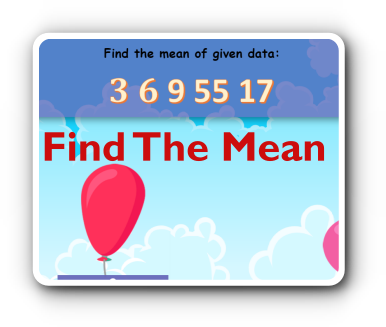
Find The Mean
Mean Median Mode Range worksheet
- PDF Worksheet
- 2 pages
Lean how to find the mean, mode, median
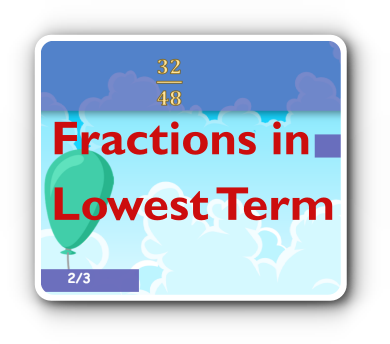
Fraction In Lowest Term
How To Simplify Fractions Game
- PDF Worksheet
- 2 pages
How to write fraction in lowest term
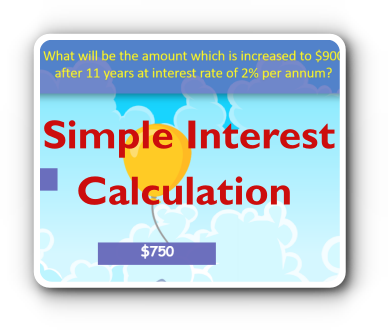
Simple Interest Calculation
How To Calculate Simple Interest
- PDF Worksheet
- 2 pages
Practice Simple Interest calculation

Sales Price With Discount
Find Sale Prices With Discount
- PDF Worksheet
- 2 pages
How to calculate the sales prices

Decimals Exponent
Exponents With Decimal Calculation
- PDF Worksheet
- 2 pages
How to do exponents with decimal numbers
Multiply Decimals
Decimal Multiplication Math Game
- PDF Worksheet
- 2 pages
Learn how to multiply decimals numbers
Add Subtract Multiply Fractions
Add Subtract Or Multiply Fractions
- PDF Worksheet
- 2 pages
Learn how to add and subtract fractions
Find The Mean
What Mean Median And Mode
- PDF Worksheet
- 2 pages
Learn how to find the mean of a sequence

Time Units Conversion
Time Conversion Units Games
- PDF Worksheet
- 2 pages
Convert into various units of time

Least Common Multiple
What Least Common Multiple
- PDF Worksheet
- 2 pages
Practice Least Common Multiple Game
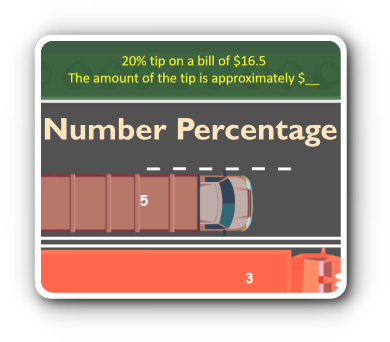
Number Percentage
Game On How Much Tips To Pay
- PDF Worksheet
- 2 pages
Learn how to Estimate Tips to pay
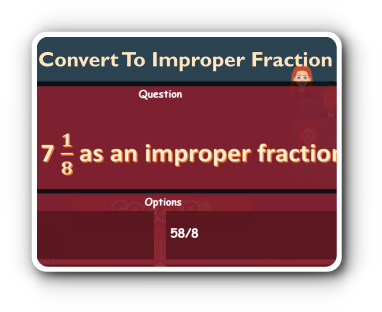
Improper Fractions
Improper Fractions And Mixed Numbers Game
- PDF Worksheet
- 2 pages
Convert Fractions to mixed numbers
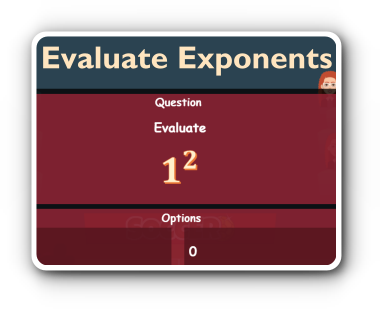
Evaluate Exponents
Exponents Formula, And Estimation
- PDF Worksheet
- 2 pages
Learn how to evaluate Exponents in math
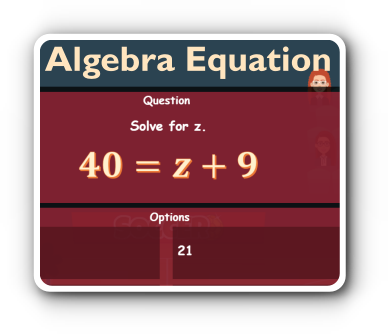
Algebra Equation
How to Solve Algebra Equation Game
- PDF Worksheet
- 2 pages
Practice Algebra 1 equation in this game


What is 6th Grade Math?
Mathematics is a crucial subject that forms the foundation for many academic and real-life skills. In 6th grade, students delve deeper into mathematical concepts and gain a more comprehensive understanding of various mathematical disciplines. This article explores the significance of 6th grade math, the core concepts covered, its real-world applications, challenges, benefits, and tips for success.
Mathematics is a fundamental subject that plays a vital role in shaping a student’s problem-solving abilities, critical thinking skills, and logical reasoning. In 6th grade, students embark on a journey to develop a solid mathematical foundation that prepares them for more advanced topics in the future. This article aims to shed light on the importance of 6th grade math, its core concepts, real-world applications, challenges, and ways to excel in this subject.
Importance of Math In 6th Grade
6th grade math is a critical stage in a student’s mathematical education. It serves as a bridge between basic arithmetic and more complex mathematical concepts. By mastering the principles of 6th grade math, students build essential skills such as problem-solving, critical thinking, and logical reasoning. These skills are not only valuable in mathematics but also in various other subjects and real-life situations.
In 6th grade math, students embark on an exciting journey exploring the world of numbers and decimals. This crucial stage lays the foundation for their mathematical knowledge and equips them with essential skills for future math courses and real-life applications. Let’s delve into the core concepts of 6th grade numbers and decimals and discover their significance.
Understanding Whole Numbers
In mathematics, numbers can be categorized into different types, each with its own unique characteristics and uses. Two primary types of numbers are decimals and whole numbers. While they both belong to the realm of real numbers, there are distinct differences between the two. Let’s explore the dissimilarities between decimal and whole numbers.
Whole numbers are a set of numbers that include zero and all positive integers (1, 2, 3, and so on) without any fractional or decimal parts. They are whole and complete entities.
On the other hand, decimals are numbers that include a decimal point, indicating the presence of a fractional part. Decimals can represent numbers between whole numbers or fractional parts of a whole.
Value and Place Value
Whole numbers are exact values and are used to represent quantities that are counted or measured in whole units. They are not fractions or parts of a whole. Each digit in a whole number has a specific place value, such as units, tens, hundreds, and so on, which determines its positional worth in the number.
Decimals, however, represent numbers that lie between whole numbers or fractional parts of a whole. They indicate a value that is more precise than a whole number. In a decimal, the digits after the decimal point also have place values, such as tenths, hundredths, thousandths, and so on. These place values determine the fractional part of the number.
Comparison and Ordering
Whole numbers can be easily compared and ordered based on their values. When comparing two whole numbers, the number with the higher value is considered greater. Whole numbers follow a natural order from smaller to larger values.
Decimals can also be compared and ordered based on their values, considering both the whole number part and the fractional part. When comparing decimals, each digit to the right of the decimal point is examined to determine which decimal is greater. Decimals allow for more precise comparisons, including values between whole numbers.
Operations and Arithmetic
Both whole numbers and decimals can be used in arithmetic operations, such as addition, subtraction, multiplication, and division.
When performing arithmetic with whole numbers, the operations are relatively straightforward, with no need to consider fractional parts. Whole number operations involve adding or subtracting complete quantities or multiplying and dividing by whole numbers.
Decimals, on the other hand, involve operations that consider both the whole number part and the fractional part. Arithmetic with decimals includes adding or subtracting the whole number parts separately and then adding or subtracting the fractional parts separately. Multiplying and dividing decimals involve considering the place values of the digits to ensure accuracy in the results.
In 6th grade, students dive deeper into whole numbers, expanding their knowledge beyond basic arithmetic. They explore the concept of place value, learning to identify the value of each digit within a number. With this understanding, they can compare and order numbers, perform addition, subtraction, multiplication, and division operations, and solve complex problems using whole numbers.
Exploring Decimals
Decimals are an essential part of 6th grade math. Students learn to work with numbers that include a decimal point, such as 0.5, 3.14, or 10.6. They understand that decimals represent parts of a whole or fractions and can be added, subtracted, multiplied, and divided, just like whole numbers.
Decimal numbers, also known as decimals, are a type of real number that includes a decimal point. They represent values that lie between whole numbers or fractional parts of a whole. Decimals allow for more precise and detailed representation of quantities and measurements.
In decimal notation, the decimal point separates the whole number part from the fractional part. The digits to the right of the decimal point represent the fractional part, indicating a portion of a whole or a fraction.
Operations with Decimals
In 6th grade, students sharpen their skills in performing operations with decimals. They learn to add and subtract decimals, ensuring that the decimal points align correctly.
Multiplying decimals involves counting the total number of decimal places in both numbers and placing the decimal point in the product accordingly.
Dividing decimals requires careful consideration of the decimal placement in both the dividend and divisor.
Decimal numbers follow the place value system, just like whole numbers. Each digit in a decimal number has a specific place value based on its position relative to the decimal point. The place value determines the magnitude or weight of the digit within the number.
Starting from the left of the decimal point, the place values in a decimal number increase by powers of ten: tenths, hundredths, thousandths, and so on. For example, in the decimal number 3.142, the digit 3 represents the units place, 1 represents the tenths place, 4 represents the hundredths place, and 2 represents the thousandths place.
Comparison and Ordering
Decimals can be compared and ordered based on their values. When comparing two decimal numbers, each digit to the right of the decimal point is examined to determine which decimal is greater. The digit in the leftmost place value that differs between the two decimals determines the comparison result.
For example, in the comparison between 3.14 and 3.142, the digit in the thousandths place (2) makes the second decimal greater than the first. Decimals allow for precise comparisons, even when values fall between whole numbers.
Decimals can also be ordered from least to greatest or vice versa by arranging them based on their values. The comparison of place values and digits guides the ordering process.
Converting Fractions to Decimals and Vice Versa
A crucial skill in 6th grade math is converting between fractions and decimals. Students learn different strategies to convert fractions to decimals and vice versa. They discover that terminating decimals, such as 0.5 or 0.25, represent fractions with denominators that are powers of ten. They also encounter repeating decimals, like 0.333…, which indicate fractions with repeating patterns.
What Are Fractions and Decimals?
Fractions represent a part of a whole or a ratio between two quantities. They consist of a numerator (the number above the fraction line) and a denominator (the number below the fraction line). Fractions are usually written in the form of a/b.
Decimals are numbers that contain a decimal point. They represent values between whole numbers or fractional parts of a whole.
How to Convert Fractions to Decimals
There are several methods to convert fractions to decimals, depending on the type of fraction.
Denominators of 10, 100, 1000, and So On
For fractions with denominators that are powers of ten, the conversion is straightforward.
Examples:
Denominators That Require Division
For other fractions, divide the numerator by the denominator to get the decimal value.
Examples:
Repeating Decimals
Some fractions result in repeating decimals. Use a bar over the repeating digit or pattern.
Examples:
Mixed Numbers
Convert the whole number and the proper fraction separately, then combine them.
Examples:
Significance of Converting Fractions to Decimals
Converting fractions to decimals allows for a more precise representation of values. It makes calculations easier, helps with comparison, and is widely used in real-life situations like measurements, finance, and data analysis.

More Accurate
Easier Calculations

Real-Life Use

Better Understanding

100% Free
Real-Life Applications of Numbers and Decimals
Understanding numbers and decimals has practical applications in everyday life. Students learn to interpret and use numbers and decimals in various real-world contexts. They can apply their knowledge to calculate discounts, determine measurements, interpret data, and make informed decisions based on numerical information.
Whole Numbers and Decimals
Students deepen their understanding of whole numbers and decimals, including place value, comparing and ordering, addition, subtraction, multiplication, and division. They learn to apply these skills to solve real-life problems.
Fractions and Mixed Numbers
Students delve into fractions, including operations such as addition, subtraction, multiplication, and division. They learn to convert between fractions, decimals, and percentages, and solve problems involving fractions in various contexts.
Ratios and Proportions
Students explore ratios and proportions, learning to solve problems involving rates, scale drawings, and proportional relationships. They gain a solid foundation in understanding proportional reasoning.
Algebraic Expressions and Equations
Students begin their journey into algebra by studying algebraic expressions, equations, and inequalities. They learn to simplify expressions, solve equations, and represent mathematical relationships using variables.
Geometry
Students investigate geometric concepts such as angles, triangles, quadrilaterals, and circles. They explore concepts of perimeter, area, volume, symmetry, and transformations.
Data Analysis and Probability
Students learn to collect,
organize, and analyze data using various statistical techniques. They explore measures of central tendency, data displays, and probability concepts.
Math games cool math games. This is a website for math games, where children can train themselves in mathematics in a fun way. This involves the 6th graders. However, There are many different math activities that can be engaging and educational for students in 6th grade. Here are some ideas
The Multiple Math Games For 6th graders.
Geometry Scavenger Hunt: Create a list of 2D and 3D shapes that students need to find around the school or neighborhood. This activity can help students review their knowledge of different shapes and their properties, as well as reinforce spatial reasoning skills.
Math Word Problems: Create a set of math word problems for students to solve. These can be real-life situations or purely fictional, but should be appropriate for a 6th grade level. This activity can help students practice reading comprehension and problem-solving skills.
Mental Math Games: There are many mental math games that can be played in the classroom to help students practice their mental calculation skills. For example, you can have students play “24 Game,” where they have to use addition, subtraction, multiplication, and division to create an equation that equals 24 using four given numbers.
Geometry Art: Have students create art projects using geometric shapes and principles. For example, students could create a cityscape using only circles, triangles, and squares, or design a quilt pattern using tessellations. This activity can help students understand the role of geometry in art and design.
Probability Games: There are many simple probability games that can be played in the classroom, such as rolling dice or flipping coins. Have students make predictions about the outcomes and then compare their results to the actual probabilities. This activity can help students understand the concept of probability and how to apply it in real-life situations.
Fraction Review: Fractions can be a challenging concept for many students. Create a set of fraction review problems for students to work on, and consider using manipulatives like fraction strips or Cuisenaire rods to help students visualize the concepts.
Measurement Conversion: Create a set of measurement conversion problems for students to solve. For example, students might need to convert between inches, feet, and yards, or between ounces, pounds, and tons. This activity can help students understand the relationships between different units of measurement.
Estimation: Have students practice their estimation skills by giving them a set of numbers and asking them to estimate the sum, product, or mean. Then, have them use a calculator to check their answers and see how close they were.
Graphing: Have students collect data on a topic of their choice and create a graph to represent the data. This activity can help students understand how to organize and interpret data using graphs.
Math Board Games: There are many math-themed board games that can be played in the classroom, such as “Chutes and Ladders” or “Candy Land.” These games can be a fun way for students to practice math skills while also engaging in friendly competition.
Simplify Fractions Expressions
Simplifying fractions is an important skill for students to learn, and there are many different games that can help make the process more engaging and fun. Here are a few ideas for simplifying fractions games:
- Fraction Matching: This is a simple card game that can be played with a deck of fraction cards. To make the cards, you will need to create a set of cards with fractions written on them in both simplified and non-simplified form. For example, you might have one card with the fraction 6/8 and another card with the fraction 3/4.
To play the game, shuffle the cards and deal them out to the players. Players then take turns trying to find a match for their card by asking other players if they have a specific fraction. For example, a player might say, “Do you have 3/4?” If another player has that fraction, they must give it to the first player. The first player to collect all of their matches wins the game.
This game can help students practice simplifying fractions by forcing them to compare the fractions on their cards to the fractions held by other players. It can also help them learn how to recognize when a fraction is already in simplified form.
- Fraction War: This is a variation on the classic card game “War,” but with a fraction twist. To play the game, you will need a deck of fraction cards, as well as a set of cards with the numbers 1 through 10 on them. Shuffle the fraction cards and deal them out to the players. Then, shuffle the number cards and place them face down in a stack.
On each turn, players draw one fraction card and one number card. The player with the larger fraction wins the round and gets to keep both cards. If the fractions are equal, then the number cards are used to determine the winner. The player with the higher number card wins the round and gets to keep both cards.
This game can help students practice simplifying fractions by forcing them to compare the fractions on their cards to the fractions held by other players. It can also help them learn how to recognize when a fraction is already in simplified form.
- Fraction BINGO: This is a variation on the classic game of BINGO, but with a fraction twist. To play the game, you will need to create a set of BINGO cards with fractions written on them in both simplified and non-simplified form. You will also need a set of fraction cards to use as calling cards.
To play the game, shuffle the fraction cards and draw one at a time, calling out the fraction to the players. Players then mark any matching fractions on their BINGO cards. The first player to get a BINGO (either horizontally, vertically, or diagonally) wins the game.
This game can help students practice simplifying fractions by forcing them to compare the fractions on their BINGO cards to the fractions called out by the game caller. It can also help them learn how to recognize when a fraction is already in simplified form.
- Fraction Jeopardy: This is a variation on the classic game show “Jeopardy,” but with a fraction twist. To play the game, you will need to create a set of fraction-themed questions and answers, organized into categories and point values. You will also need a game board and a set of game pieces.