Addition Games for Grade 1 help children learn basic addition in a fun and easy way. Kids can practice adding numbers and improve their math skills through playful activities.

2nd Grade Math Games
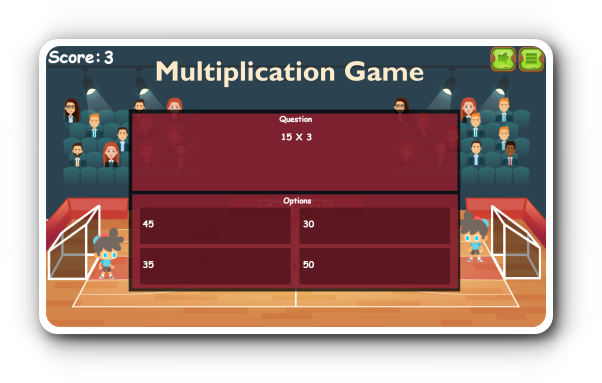
Multiplication Game
Multiplication Math Game
- PDF Worksheet
- 2 pages
Practice multiplication soccer math games
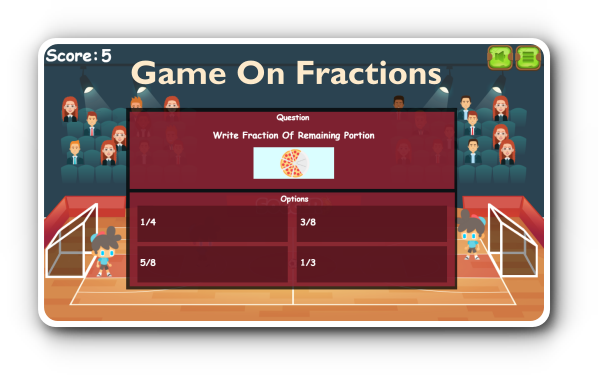
Game On Fractions
Fraction Math Is Fun
- PDF Worksheet
- 2 pages
Practice soccer math games in fractions
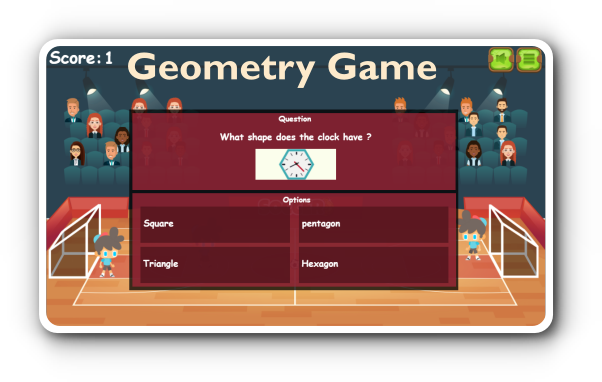
Geometry Game
Geometry Math Game
- PDF Worksheet
- 2 pages
Practice soccer math games in geometry

Place Value Game
Place Value Math Game
- PDF Worksheet
- 2 pages
Understand place value math game
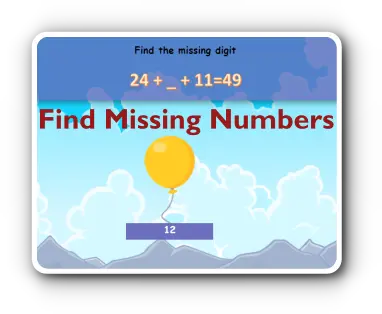
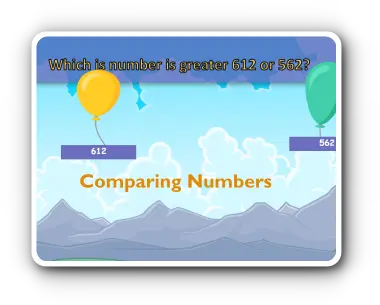
Compare Numbers
Compare Numbers up to 1000
- PDF Worksheet
- 2 pages
Practice Compare Numbers up to 1000
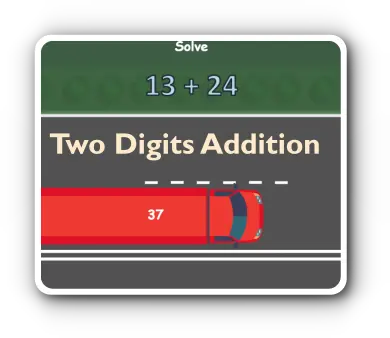
Two Digits Addition
Addition of two digit numbers
- PDF Worksheet
- 2 pages
Practice Addition of two digit numbers
Number Pattern
Number Pattern Count By 100
- PDF Worksheet
- 2 pages
Practice Number Pattern Count By 100
Two Digits Subtraction
Two Digits Subtraction With Regrouping
- PDF Worksheet
- 2 pages
Practice Two Digits Subtraction With Regrouping
Reading Graphs
Convert From Expanded Form Up To Thousands
- PDF Worksheet
- 2 pages
Practice Convert From Expanded Form Up To Thousands
Time AM Or PM
Telling Time AM Or PM
- PDF Worksheet
- 2 pages
Practice Telling Time AM Or PM
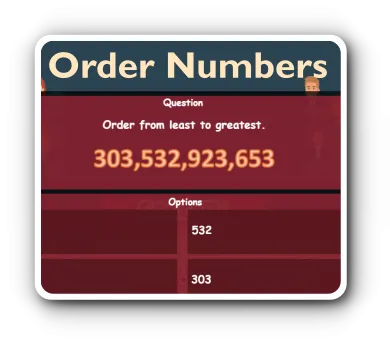
Order Number
Order from least to greatest
- PDF Worksheet
- 2 pages
Practice Order from least to greatest
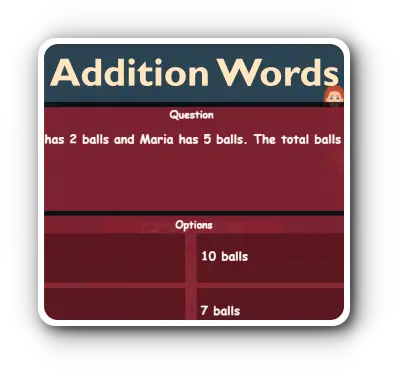
Addition Words
Word Problems Based On Addition
- PDF Worksheet
- 2 pages
Practice Word Problems Based On Addition
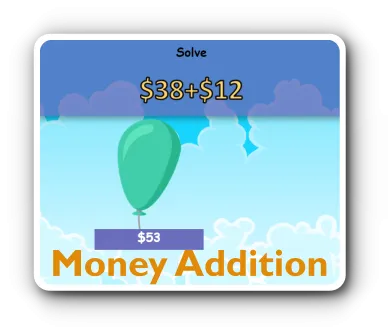
Money Addition
Add And Subtract Money
- PDF Worksheet
- 2 pages
Practice Add And Subtract Money
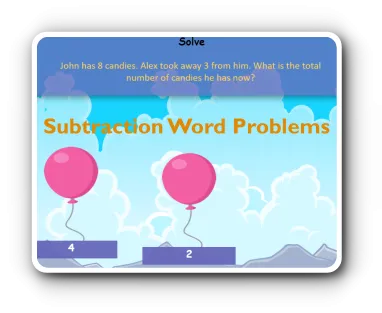
Subtraction Word Problems
Word Problems Based On Subtraction
- PDF Worksheet
- 2 pages
Practice Word Problems Based On Subtraction
Money Addition
Expanded Form Of Number
- PDF Worksheet
- 2 pages
Practice Expanded Form Of Number

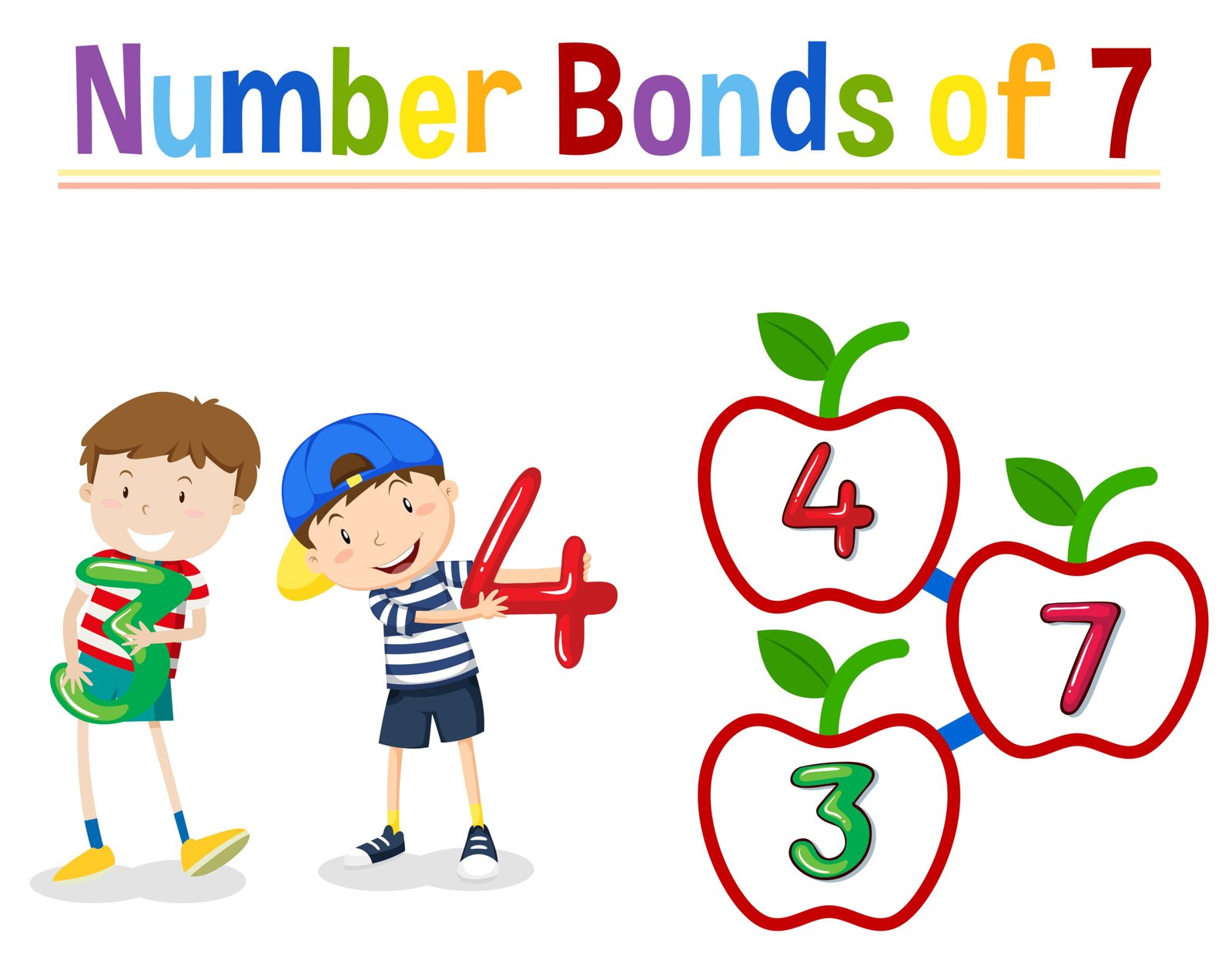
2nd grade math games / Free Math Games For Kids
Kids nowadays are always getting distracted from the subject of mathematics which they consider boring and troublesome. Just as they drift away from studying, kids are lured to overusing technology so much and gadgets are used for non-productive entertainment.
Mathzone4kids understands parents’ concerns and provides the best math resources a 2nd grader needs. What is better than attracting kids to fun games that teach them side by side? This page offers free online interactive games for 2nd graders that enhance their skills.
In the digital age, technology offers valuable resources to supplement traditional classroom learning. Online math games provide an interactive and engaging platform for students to practice math skills while having fun. In this article, we will explore free online math games specifically designed for 2nd-grade students. These games offer an exciting opportunity to enhance mathematical proficiency and foster a love for learning. Let’s dive into the world of free online math games for 2nd graders.
Counting and Number Sense Games
Counting and number sense form the foundation of mathematical understanding. Online math games for 2nd graders often include activities that reinforce these fundamental concepts. Games such as “Number Bubble” or “Fruit Splat” help students practice number recognition, counting, and ordering while engaging in interactive gameplay.
Engaging students in counting and number sense games can make learning enjoyable and effective. In this article, we will explore the importance of counting and number sense games, their benefits, and how they contribute to building strong mathematical foundations. Let’s dive into the world of counting and number sense games.
Counting and number sense games provide an interactive and hands-on approach to develop essential mathematical skills. These games are designed to help students practice counting, recognize numbers, understand their relationships, and develop a solid foundation in number sense. By engaging in these games, students enhance their mathematical fluency, critical thinking, and problem-solving abilities.
One of the primary benefits of counting and number sense games is the improvement of numeracy skills. Through engaging gameplay, students have the opportunity to practice counting from one to ten, twenty, or even higher, depending on their grade level. By repeatedly counting objects or numbers, students develop accuracy, speed, and confidence in their counting abilities.
Number recognition is another crucial aspect of counting and number sense games. By visually identifying numbers, students become familiar with their shapes, names, and sequences. Games like “Number Bingo” or “Number Memory Match” help reinforce number recognition skills in an enjoyable and interactive way, ensuring students can quickly identify numbers and understand their order.
Counting and number sense games also foster an understanding of the relationships between numbers. Games that involve ordering numbers or placing them on a number line help students grasp the concepts of greater than, less than, and equal to. These activities develop students’ ability to compare and order numbers, enhancing their number sense and mathematical reasoning.
Furthermore, counting and number sense games support the development of problem-solving skills. As students engage in these games, they encounter various challenges that require them to apply counting strategies and number sense to solve problems. By exploring different approaches and strategies, students develop critical thinking skills, logical reasoning, and creative problem-solving abilities.
Counting and number sense games provide opportunities for hands-on learning and active engagement. Students actively participate in gameplay, interacting with numbers and objects, making connections, and applying mathematical concepts in a practical context. This active involvement promotes a deeper understanding of counting and number sense, making learning more meaningful and memorable.
Counting and number sense games can be adapted to suit different grade levels and skill levels. They can range from simple counting games for early learners to more complex games involving place value or operations for older students. Teachers and parents can select games that align with the specific learning objectives and provide appropriate challenges to students.
Incorporating counting and number sense games into the curriculum offers a balanced and comprehensive approach to mathematical instruction. These games can be integrated into classroom activities, used as math centers or stations, or assigned as homework assignments. By incorporating these games, educators create a learning environment that promotes enthusiasm, engagement, and a positive attitude towards mathematics.
In conclusion, counting and number sense games play a vital role in developing strong mathematical foundations. Through engaging gameplay, students enhance their numeracy skills, number recognition, understanding of number relationships, and problem-solving abilities. By incorporating these games into the learning journey, educators ignite students’ enthusiasm for mathematics, foster a deep understanding of counting and number sense, and set the stage for future mathematical success.
Addition and Subtraction Games
Building fluency in addition and subtraction is essential for 2nd-grade students. Online math games like “Math Man Addition” or “Subtraction Bowling” offer opportunities to practice these operations in a fun and interactive way. These games provide a dynamic environment where students can develop their mental math skills and improve their ability to solve basic arithmetic problems accurately and quickly.
Engaging students in addition and subtraction math games can make learning these operations enjoyable and help develop a strong foundation in mathematical skills. In this article, we will explore the importance of addition and subtraction math games, their benefits, and how they contribute to building mathematical proficiency. Let’s dive into the world of addition and subtraction math games.
01
Addition and subtraction math games provide an interactive and hands-on approach to practicing these fundamental operations. These games are designed to reinforce concepts, improve computational skills, and foster a love for mathematics. By engaging in these games, students enhance their fluency in addition and subtraction, develop critical thinking abilities, and strengthen their problem-solving skills.
02
One of the primary benefits of addition and subtraction math games is the improvement of computational skills. By engaging in interactive gameplay, students practice adding and subtracting numbers, developing accuracy, speed, and confidence in their computational abilities. Through repetition and reinforcement, students become more proficient in mental calculations and gain fluency in these operations.
03
Addition and subtraction math games also promote critical thinking and problem-solving abilities. As students participate in these games, they encounter various challenges that require them to apply addition and subtraction strategies to solve problems. They develop the ability to analyze problems, make decisions, and use critical thinking skills to find solutions. These games encourage students to think creatively, enhance their logical reasoning, and build problem-solving skills that can be applied to real-world situations.
04
Furthermore, addition and subtraction math games provide an engaging and interactive learning experience. By incorporating elements of play and competition, these games capture students’ attention and motivate them to actively participate in the learning process. The enjoyment derived from gameplay promotes a positive attitude towards mathematics and fosters a love for learning.
05
Addition and subtraction math games can be adapted to suit different grade levels and skill levels. They can range from simple games that reinforce basic addition and subtraction facts to more complex games that involve multi-digit operations or problem-solving. Teachers and parents can select games that align with the specific learning objectives and provide appropriate challenges to students.
06
Addition and subtraction math games can be adapted to suit different grade levels and skill levels. They can range from simple games that reinforce basic addition and subtraction facts to more complex games that involve multi-digit operations or problem-solving. Teachers and parents can select games that align with the specific learning objectives and provide appropriate challenges to students.
07
Incorporating addition and subtraction math games into the curriculum offers a well-rounded approach to mathematical instruction. These games can be integrated into classroom activities, used as math centers or stations, or assigned as homework assignments. By incorporating these games, educators create a learning environment that promotes enthusiasm, engagement, and a deeper understanding of addition and subtraction.
08
Addition and subtraction math games can also be played individually or in groups, fostering collaboration and teamwork. In group settings, students can work together to solve problems, discuss strategies, and learn from one another. This collaborative aspect of math games promotes effective communication, cooperation, and peer learning.
09
In conclusion, addition and subtraction math games play a vital role in developing mathematical proficiency and a love for learning. Through engaging gameplay, students enhance their computational skills, critical thinking abilities, and problem-solving skills. By incorporating these games into the learning journey, educators ignite students’ enthusiasm for mathematics, foster a deep understanding of addition and subtraction, and pave the way for future mathematical success.
Measurement and Data Games
Measuring objects and understanding data are crucial skills for 2nd graders. Online math games focused on measurement and data introduce concepts such as length, weight, and graphing. Games like “Measure and Mix Chocolate Chip Cookies” or “Graphing Starfish” allow students to explore these concepts through hands-on virtual activities, making learning engaging and memorable.
What You’ll Learn

Measure Objects
Explore length, weight, time and more through fun, interactive games.

Work with Data
Collect, organize and interpret data using engaging activities.

Build Critical Thinking
Solve real-world problems by analyzing, comparing and making decisions.

Engaging & Fun
Learn through play, exploration and real-life scenarios.

Great for All Learners
Works for different grade levels and skill levels, with flexible options.
Why Measurement and Data Games Matter
Measurement and data games provide an interactive and hands-on approach to understanding and applying measurement concepts and working with data. These games help students develop essential skills, build confidence, and see how math fits into everyday life. By making learning fun and practical, they create a strong foundation for future success in mathematics and beyond.
The Key Benefits
- Improves measurement skills and accuracy
- Builds data analysis and interpretation skills
- Boosts critical thinking and problem-solving
- Makes math fun and engaging
- Prepares students for real-life situations
Time and Money Games
Developing skills in telling time and counting money are essential for 2nd-grade students. Online math games like “Bang on Time” or “Counting Coins” provide opportunities for students to practice these skills in a playful environment. Through interactive games, students can learn to read analog and digital clocks, count money, and make real-world connections.
Time and money are essential concepts that students encounter in their everyday lives. Engaging students in time and money games can make learning these practical math skills enjoyable and meaningful. In this article, we will explore the importance of time and money games, their benefits, and how they contribute to building strong mathematical foundations. Let’s dive into the world of time and money games.
Time and money games provide an interactive and hands-on approach to practicing these real-world mathematical concepts. These games are designed to help students develop important skills related to telling time, understanding currency, and making financial decisions. By engaging in these games, students enhance their ability to read clocks, count money, and apply mathematical concepts in practical contexts.
One of the primary benefits of time and money games is the development of time-telling skills. By actively participating in games that involve reading analog and digital clocks, students become more proficient in telling time. These games provide opportunities to practice identifying hours, minutes, and various time increments, improving their accuracy and speed in time-telling.
Money games, on the other hand, help students understand the concept of currency, practice counting coins and bills, and develop skills in making financial calculations. By engaging in games that involve purchasing items, making change, or budgeting, students gain practical experience in handling money and making informed financial decisions.
Time and money games also foster critical thinking and problem-solving abilities. As students participate in these games, they encounter various challenges that require them to apply their understanding of time and money concepts to solve problems. By analyzing situations, making calculations, and making decisions, students develop critical thinking skills and enhance their ability to apply mathematical concepts in real-world scenarios.
Furthermore, time and money games provide an engaging and practical learning experience. By incorporating elements of play, competition, and real-life scenarios, these games capture students’ attention and motivate them to actively participate in the learning process. The enjoyment derived from gameplay promotes a positive attitude towards math and fosters a deeper understanding of time and money concepts.
Time and money games can be adapted to suit different grade levels and skill levels. They can range from simple games that reinforce basic time-telling or coin-counting skills to more complex games that involve calculating change, budgeting, or managing finances. Teachers and parents can select games that align with the specific learning objectives and provide appropriate challenges to students.
Incorporating time and money games into the curriculum offers a well-rounded approach to mathematical instruction. These games can be integrated into classroom activities, used as math centers or stations, or assigned as homework assignments. By incorporating these games, educators create a learning environment that promotes enthusiasm, engagement, and a practical understanding of time and money concepts.
Time and money games can also be played individually or in groups, fostering collaboration and teamwork. In group settings, students can work together to solve time-related problems, count money, or engage in financial simulations. This collaborative aspect of time and money games promotes effective communication, cooperation, and peer learning.
In conclusion, time and money games play a vital role in developing practical math skills and real-world connections. Through engaging gameplay, students enhance their time-telling abilities, develop skills in handling money, and make informed financial decisions. By incorporating these games into the learning journey, educators ignite students’ enthusiasm for mathematics, foster a deep understanding of time and money concepts, and equip them with practical skills for life.
Geometry and Shapes Games
Exploring geometry and shapes helps students develop spatial awareness and critical thinking skills. Online math games like “Shape Patterns” or “Geoboard” enable students to explore geometric concepts, recognize shapes, and identify patterns. These games offer a visual and interactive approach to learning geometry, fostering creativity and problem-solving abilities.

Why It’s So Beneficial
- Promotes independent learning
- Provides immediate feedback
- Fosters a positive attitude towards math
- Develops critical thinking, problem-solving and decision-making skills
- Enhances computer literacy
More Than Just Shapes
These are just a few examples of the wide range of free online math games available for 2nd-grade students. Many educational websites and platforms provide access to a variety of games that align with the curriculum and learning objectives. Teachers can incorporate these games into their lesson plans, assign them as homework activities, or encourage students to explore them independently.