Make Math Fun Learn Practice Succeed Worksheet Game Quizzes

Games

5th Grade Math Games

5th Grade Math Games help children improve their math skills through fun and engaging activities. Kids can practice fractions, decimals, geometry, and problem-solving while making learning enjoyable.

5th Grade Math Games

Quotient Estimate

How To Estimate the Quotient

Practice quotient estimation game

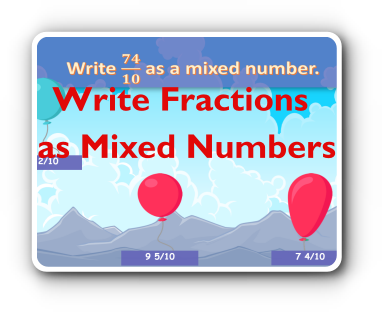
Fraction and percent

Decimals To Fraction and percent

Decimal to fraction how math game

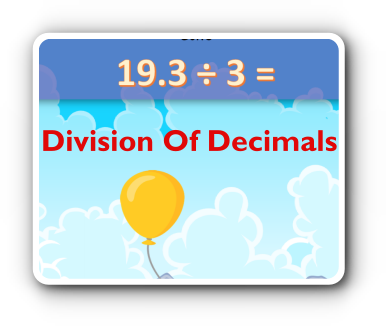
Decimal of Division

Decimal Division By Whole Number

Learn how to divide decimals by numbers

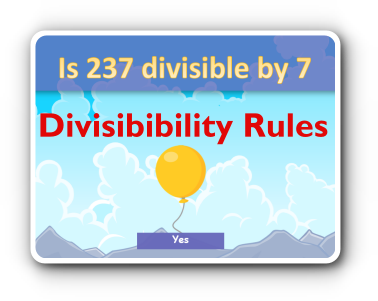
Divisible Rules

Divisible Numbers. How to Find out

How to find divisible numbers by  Rules


Fractions And Subtraction

Add And Subtract Fractions

add and subtract fractions how to

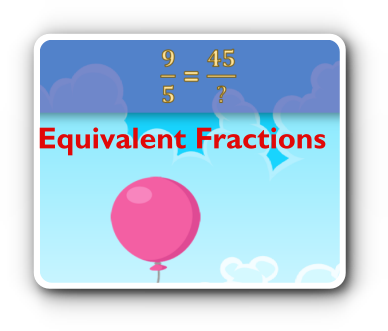
Equivalent Fraction

How To Do Equivalent Fraction

How to do fraction equivalent 

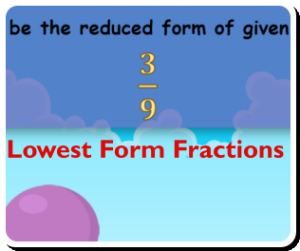
Lowest Form Fractions

How To Simplify fractions to the lowest

How to reduce Fractions to the Lowest Terms

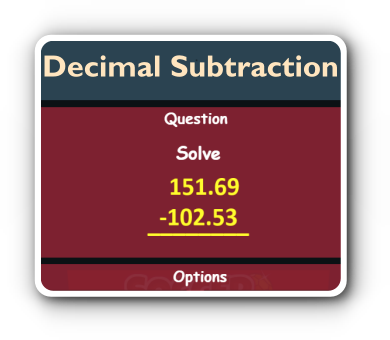
Decimal Subtraction

Subtract Decimal Numbers Up To 100

How to subtract Decimal Numbers.

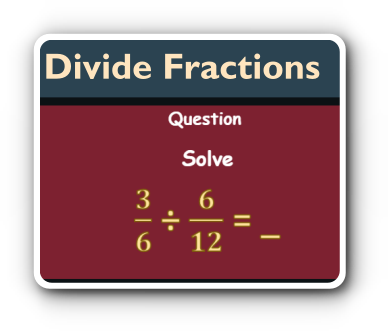
Divide fractions

Add, Subtract, Multiply or Divide Fractions

Practice fraction division and multiplication

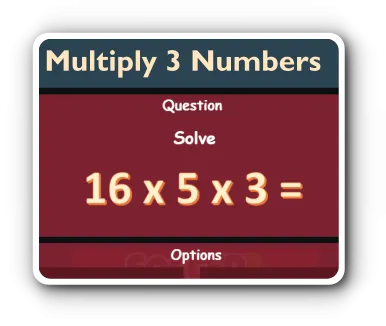
Multiply 3 Numbers

Multiply Three Or Four Digits Numbers

Learn three numbers multiplication

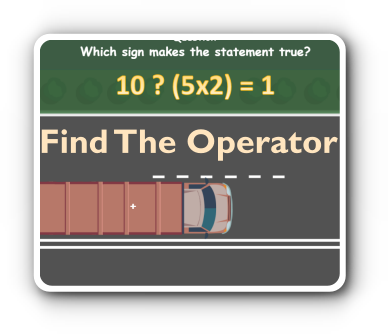
Find The Operator

Finding The Missing Operators Game

How to identify the missing operator 

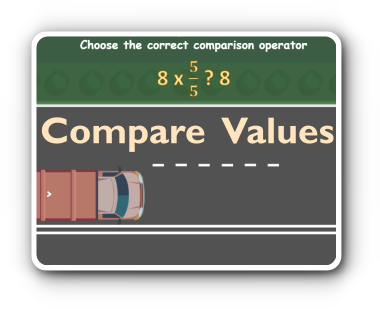
Compare Value

Scaling Whole Numbers By Fractions

Practice the scaling of whole numbers

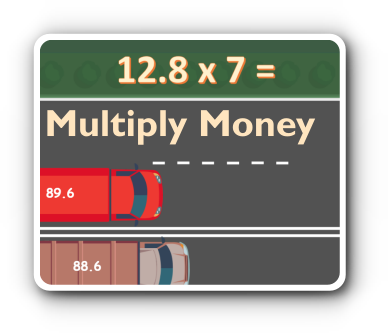
Multiply Money

Money Multiplication With Decimals

How to multiply money by whole numbers

Compare Metric Units

Compare And Convert Metric Units Of Mass

Learn how to Compare and convert metric

Fractions Ordering

Order Fractions with Unlike Denominator

Order Fractions With Unlike Denominators

Simple Interest

What Is Simple Interest

Game on simple interest calculation

Interactive Online Games For Grade 5 Students

Fun Math Games for 5th Graders | 5th Grade Math Games | This page helps children in their 4th year to learn math in a fun way by playing math games. As the page loads, the vibrant and kid-friendly interface captures your attention. The header is colorful and contains playful font. At the top of the webpage, you see a clearly defined navigation bar with sections like “Home,” “All Games,” “Topics,” “Progress Tracker,” and “Help.”

Below the header, there’s a short welcoming message encouraging children to enjoy learning math through games. It explains how the games align with the grade 5 math curriculum. Next, the main part of the webpage displays a grid of game thumbnails. Each game is represented by a colorful, enticing image and a catchy title. The games are divided into categories, each representing a specific math concept like fractions, decimals, multiplication, division, geometry, and so on. Hovering over each thumbnail provides a brief description of the game and the concepts it covers.

On the right-hand side of the webpage, there’s a “Featured Game” section that highlights a particular game each week. It includes a detailed description of the game, a trailer, and reviews from other players. Towards the bottom of the webpage, there’s a “Progress Tracker” feature. This allows users to create an account and keep track of their game progress and improvements over time. It also includes features to track strengths and areas for improvement, providing personalized game recommendations.

There’s also an interactive “Help” chatbot at the bottom right corner of the webpage that can answer questions or provide assistance navigating the site. The webpage ends with a footer containing links to terms of service, privacy policy, contact information, and social media handles. Overall, the website design is interactive, engaging, and user-friendly, making math learning a fun-filled experience for 5th graders

As a result, the current 5th grade math online games page features interesting activities such as : 
How To Estimate the Quotient

When it comes to performing mathematical operations, accuracy is crucial. However, in certain situations, it can be time-consuming or unnecessary to find the exact quotient. That’s where estimating quotients comes into play. In this article, we will explore the concept of estimating quotients, various methods to achieve quick approximations, and the benefits it brings. So let’s dive in and master the art of estimating quotients!

How To Estimate the Quotient

Before delving into the estimation techniques, it’s important to have a clear understanding of what a quotient is. In simple terms, a quotient is the result of dividing one number by another. It represents the quantity obtained when a dividend is divided by a divisor.
Estimating quotients holds significant value in many real-life scenarios. From everyday calculations to complex problem-solving, estimating allows us to make quick approximations that are often sufficient for practical purposes. Whether you’re estimating the cost of groceries or making rough calculations in engineering, having the ability to estimate quotients can save time and provide valuable insights.

Mental Estimation

Mental estimation involves using mental math skills to arrive at a rough approximation of the quotient.

Rounding Method

The rounding method is a commonly used technique for estimating quotients.

Compatible Numbers Method

The compatible numbers method focuses on finding compatible numbers that are easy to divide mentally.

Front-End Estimation

Front-end estimation is a strategy that involves considering only the leading digits of the dividend and divisor.

Decimal To Fraction Conversion Math game

Another section of this game page focuses on the conversion of decimals to fractions and percentage. Decimals are a common way to represent numbers, but they can also be converted into fractions and percentages. Understanding how to convert decimals to fractions and percentages is a valuable skill in various fields, including mathematics, science, and finance. In this article, we will explore the conversion methods for decimals to fractions and percentages, providing you with the knowledge to unlock these conversion techniques.

Converting Decimals to Fractions
Understanding Decimal Numbers
Before diving into the conversion process, it’s essential to have a solid understanding of decimal numbers. Decimals represent numbers that fall between whole numbers, allowing for precise measurements and calculations. They consist of a decimal point followed by digits that can extend infinitely or terminate.
Converting Terminating Decimals
Terminating decimals are decimal numbers that have a finite number of digits after the decimal point. To convert a terminating decimal to a fraction, you simply need to express the digits after the decimal point as the numerator and a power of ten as the denominator.
Converting Repeating Decimals
Repeating decimals are decimal numbers in which one or more digits repeat infinitely. Converting repeating decimals to fractions requires identifying the repeating pattern and expressing it as the numerator. The number of digits in the pattern determines the denominator.
Converting Decimals to Percentages. Decimal to Percent Conversion Formula. Converting decimals to percentages is straightforward. To convert a decimal to a percentage, multiply the decimal by 100 and append the percentage symbol (%).

Examples of Decimal to Percent Conversion

Let’s consider an example: If we have a decimal number 0.75, we can convert it to a percentage by multiplying it by 100, which gives us 75%. Similarly, a decimal of 0.25 can be converted to 25%.
Converting Percentages to Decimals: Percent to Decimal Conversion Formula. Converting percentages to decimals involves dividing the percentage value by 100.
Examples of Percent to Decimal Conversion
For instance, if we have a percentage of 50%, we can convert it to a decimal by dividing 50 by 100, which yields 0.5. Likewise, a percentage of 20% can be converted to 0.2.

Divisible Numbers Math Game

This page also features activities related to Divisible numbers, which  refer to numbers that can be evenly divided by another number without leaving a remainder. When one number is divisible by another, it implies that the quotient obtained through division is a whole number.
Divisibility Rules
Divisibility rules are guidelines that help us determine if a number is divisible by another number without performing the actual division. These rules provide quick and efficient methods to identify divisibility patterns.
Testing Divisibility for Specific Numbers
Divisibility by 2:  A number is divisible by 2 if its last digit is even (ends in 0, 2, 4, 6, or 8).
Divisibility by 3: A number is divisible by 3 if the sum of its digits is divisible by 3.
Divisibility by 4: A number is divisible by 4 if the last two digits form a number divisible by 4.
Divisibility by 5: A number is divisible by 5 if its last digit is 0 or 5.
Divisibility by 6: A number is divisible by 6 if it is divisible by both 2 and 3.
Divisibility by 9: A number is divisible by 9 if the sum of its digits is divisible by 9.
Divisibility by 10: A number is divisible by 10 if its last digit is 0.
Strategies for Finding Divisible Numbers: Prime Factorization Method
The prime factorization method involves expressing a number as a product of its prime factors. By examining the prime factors, you can determine the divisors and find the divisible numbers.

Divisibility Test with Mental Math

Developing mental math strategies allows for quick divisibility tests. For example, for smaller numbers, memorizing the divisibility rules mentioned earlier can help identify divisible numbers without the need for extensive calculations.
Divisible numbers form the foundation of various mathematical operations. By understanding the concept of divisibility and utilizing the divisibility rules, you can quickly identify numbers that are divisible by others. The strategies discussed in this article, such as prime factorization and mental math tests, empower you to efficiently find divisible numbers and enhance your mathematical skills.